Grand River Facts and Information


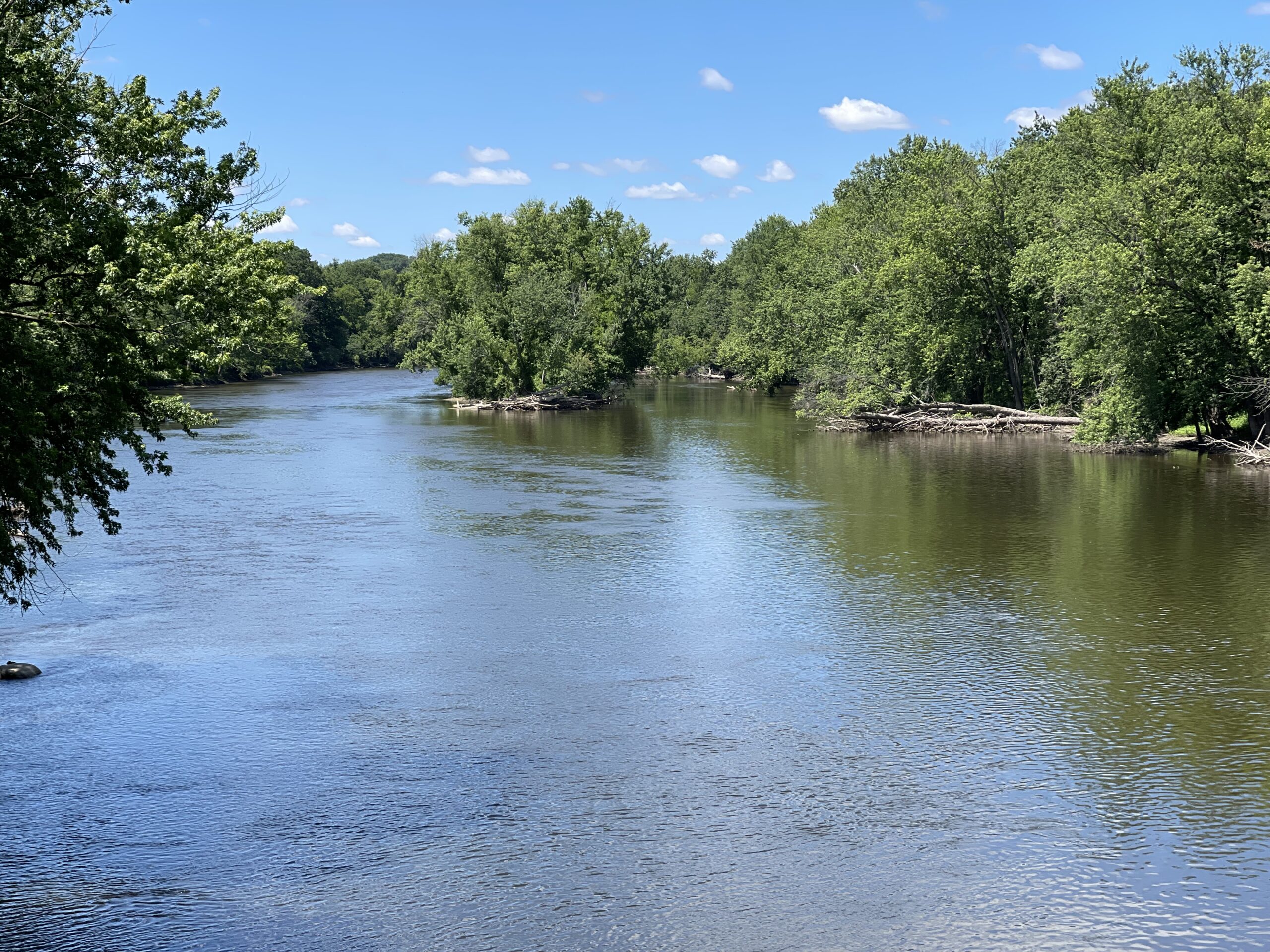
The Grand River is the longest river in the U.S. state of Michigan . It runs 260 miles (420 km) through the cities of Jackson , Lansing , Grand Rapids , and Grand Haven, and the counties of Hillsdale, Jackson, Ingham, Eaton, Clinton, Ionia, Kent, and Ottawa before emptying into Lake Michigan .

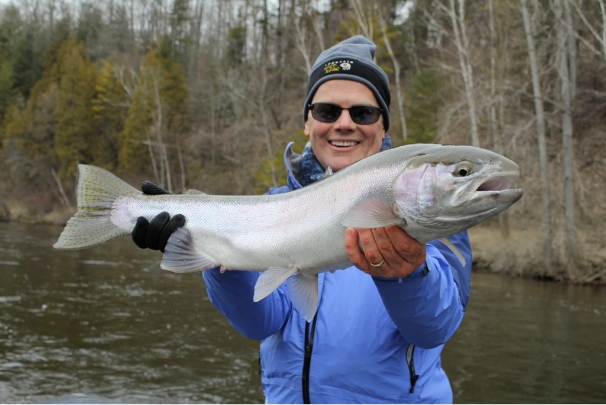
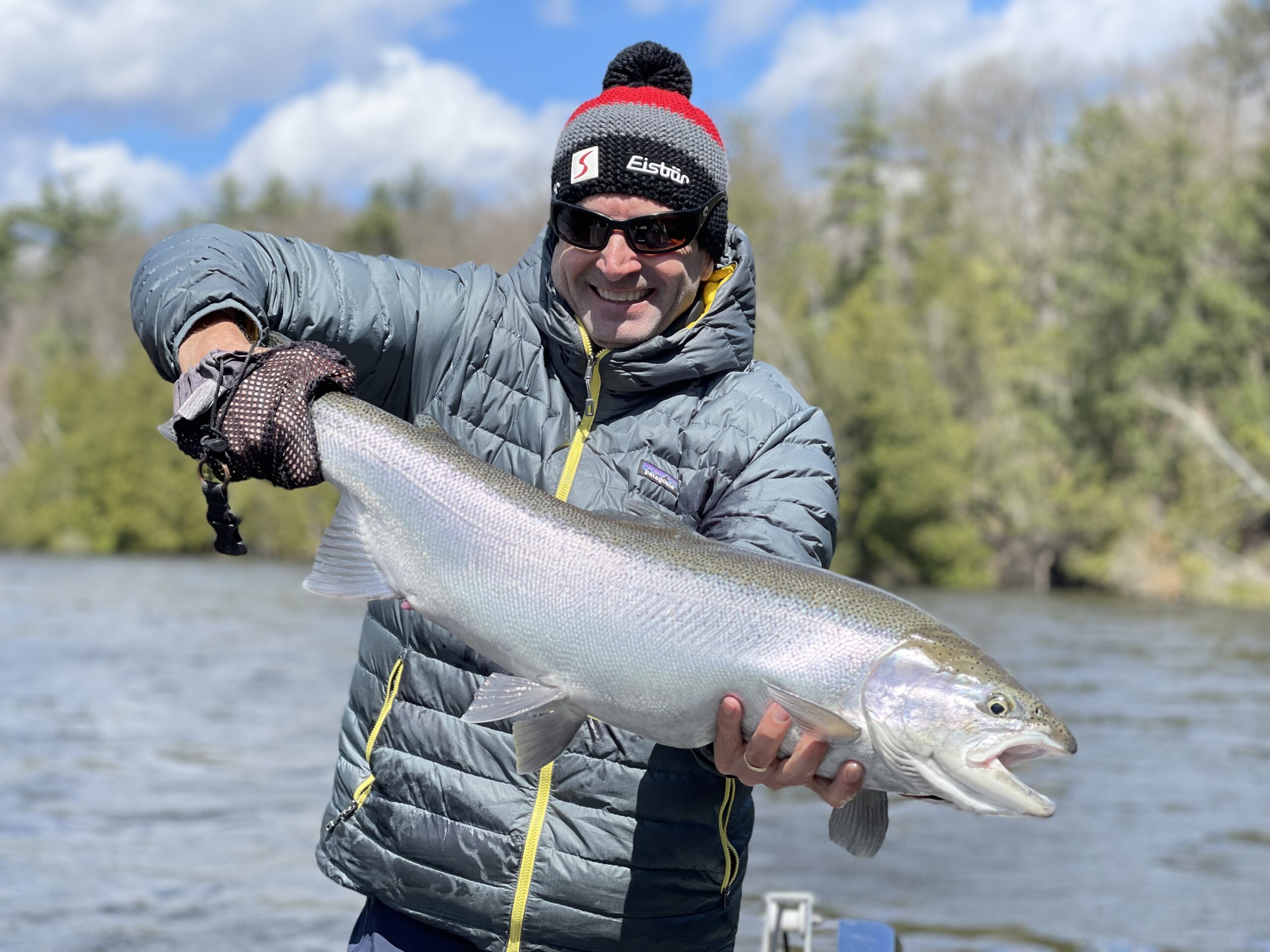
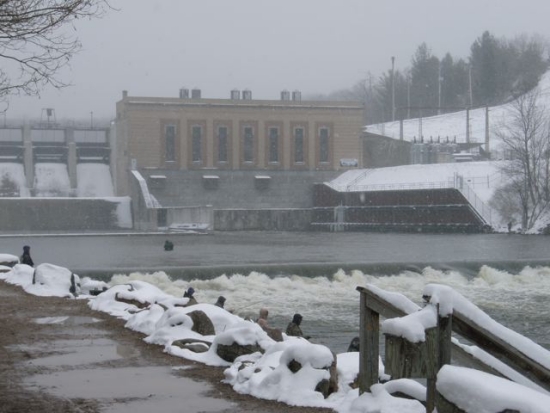
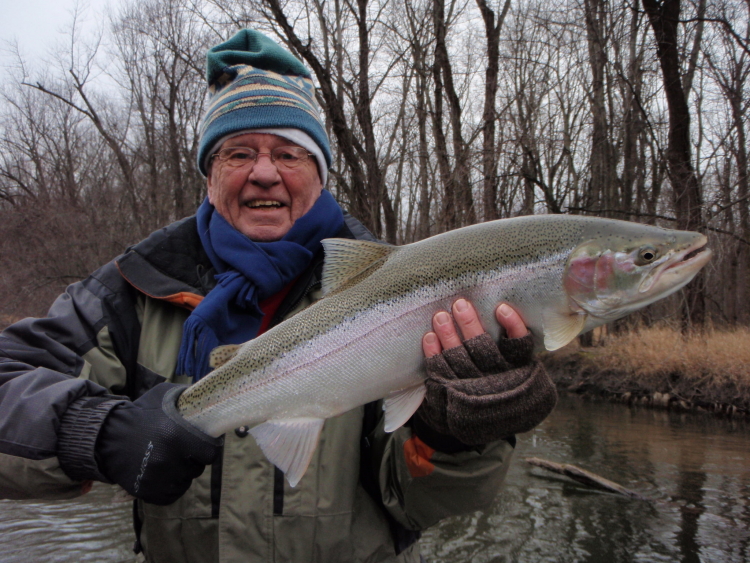
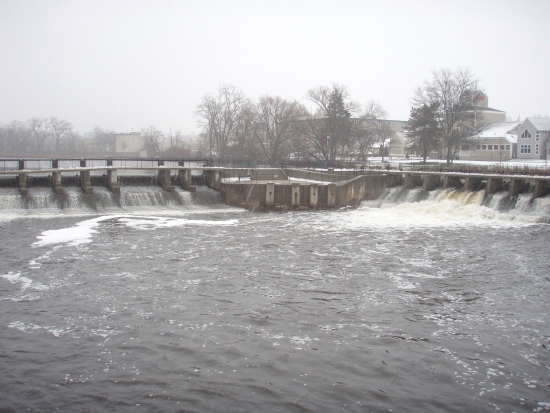
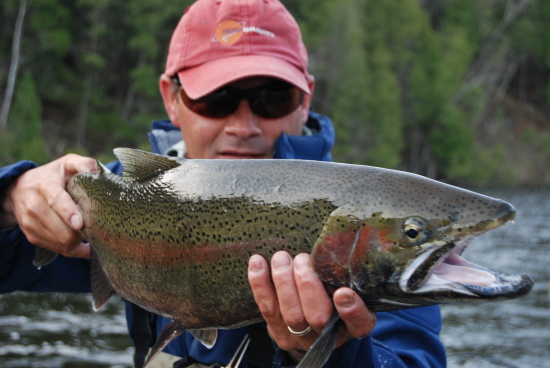
Its watershed drains an area of 5,572 mile² (14,431 km²). The Grand River carries an average 3,800 ft³/s (108 m³/s). It has several dams along its length but is a trout and salmon stream for much of its length.

It is estimated that 22% of the pesticide usage in the Lake Michigan watershed occurs in the Grand River drainage which accounts for only 13% of the total watershed. Much of the basin is flat and it contains many swamps and lakes. Nevertheless, there is an elevation difference of 700 feet (213 m) between the source and mouth of the river.

Tributaries are the Red Cedar River , Looking Glass River , Maple River , Flat River , Thornapple River , and the Rogue River .

A 500 passenger dinner cruise ship modeled after a riverboat operates on the river in Lansing.

Grand Rapids was built on the site of a large rapids on the river, although these have disappeared after the installation of a low-head dam , and later a fish ladder .

 History

Before roads, canals, and railroads, the Grand River was an important navigational route through the Lower Peninsula of Michigan , used for centuries by various Native American tribes and later by explorers and white settlers. The river was called O-wash-ta-nong, meaning "Far-away-water" because of its length.

It also formed part of a major demarcation of land ceded by Native Americans enabling U.S. settlers to legally obtain title to land in the area. In the 1821 Treaty of Chicago , the Ottawa , Ojibwe , and Potawatomi ceded to the United States all lands in Michigan Territory south of the Grand River, with the exception of several small reservations.

Grand River Avenue (or Grand River Road) was built early in the settlement of Michigan and runs from the head of navigation on the Grand to downtown Detroit. It formed an important part of an early route between Chicago and Detroit , along with the Grand itself, from Grand Rapids to Grand Haven, and Lake Michigan .

Grand Rapids

Grand Rapids is a city in the U.S. state of Michigan . As of the 2000 census , the city population was 197,800. The Grand Rapids Metropolitan Statistical Area had a population of 774,084, while the Combined Statistical Area of Grand Rapids-Muskegon-Holland had a population of 1,320,487 as of the 2006 census estimate . It is the county seat of Kent County, Michigan . It is the second largest city in the state and is the principal city in West Michigan .


 History

Pearl Street, located downtown, c.1885

Over 2,000 years ago, people associated with the Hopewell culture occupied the Grand River Valley. Around 1700 A.D., the Ottawa Indians moved into the area and founded several villages along the Grand River .

The Grand Rapids area was first settled by Europeans near the start of the 19th century by missionaries and fur traders , who generally lived in reasonable peace alongside the Ottawa tribespeople, trading their European metal and textile goods for the fur pelts. Joseph and Madeleine La Framboise established the first Indian/European trading post in West Michigan and in present Grand Rapids, on the banks of the Grand River near what is now Ada . After the death of her husband in 1806, Madeleine La Framboise carried on, expanding fur trading posts to the west and north. La Framboise, a mix of French and Indian descent, later merged her successful operations with the American Fur Company and retired, at age 41, to Mackinac Island . The first permanent white settler in the Grand Rapids area was a Baptist minister named Isaac McCoy who arrived in 1825.

In 1826 Detroit-born Louis Campau , the official founder of Grand Rapids, built his cabin, trading post, and blackmith shop on the east bank of the Grand River near the rapids. Campau returned to Detroit and came back a year later with his wife and $5,000 of trade goods to trade with the native tribes. In 1831 the federal survey of the Northwest Territory reached the Grand River and set the boundaries for Kent County, named after prominent New York jurist James Kent . Campau became perhaps the most important settler when, in 1831, he bought 72 acres (291,000 m²) of what is now the entire downtown business district of Grand Rapids from the federal government for $90 and named his tract Grand Rapids. Rival Lucius Lyon , who purchased the rest of the prime land, called his the Village of Kent. Yankee immigrants and others began immigrating from New York and New England in the 1830s.

In 1836 John Ball , representing a group of New York land speculators, bypassed Detroit for a better deal in Grand Rapids. Ball declared the Grand River valley "the promised land, or at least the most promising one for my operations."

By 1838 the settlement had incorporated as a village encompassing an area of approximately three-quarters of a mile (1 km) . The first formal census occurred in 1845 which announced a population of 1,510 and recorded an area of four square miles. The city of Grand Rapids was officially created on May 1 , 1850 , when the village of Grand Rapids voted to accept the proposed city charter. The population at the time was 2,686. By 1857, the city of Grand Rapids' boundary totaled 10.5 square miles (27 km²).

 Furniture City

During the second half of the 19th century the city became a major lumbering center and the premier furniture manufacturing city of the United States . For this reason it was nicknamed "Furniture City". After an international exhibition in Philadelphia in 1876, Grand Rapids became recognized worldwide as a leader in the production of fine furniture. National home furnishing markets were held in Grand Rapids for about 75 years, concluding in the 1960s. Today, Grand Rapids is considered a world leader in the production of office furniture.

The Grand Rapids and Indiana Railroad began passenger and freight service to Cedar Springs, Michigan on December 25 , 1867 . This railroad expanded service from Grand Rapids to Muskegon, northern Michigan and into Indiana and Ohio over the next few decades.

In 1880, the country's first hydro-electric generator was put to use on the city's west side[2] . With the new century, the people of Grand Rapids numbered 82,565. In 1916 the citizens of Grand Rapids voted to adopt a home rule charter that abolished the old aldermanic systems and replaced it with a commission-manager form of government, one of the first in the country. That 1916 Charter, although amended several times, is still in effect.

Grand Rapids was a home to the first regularly scheduled passenger airline in the United States when Stout Air Services began flights from Grand Rapids to Detroit (actually Ford Airport in Dearborn, Michigan ) on July 31 , 1926 .

In 1945, Grand Rapids became the first city in the United States to add fluoride to its drinking water.

Downtown Grand Rapids used to host four department stores: Herpolsheimer's (Lazarus in 1987), Jacobson's , Steketee's (founded in 1862), and Wurzburg's . Like most downtown regional department stores, they suffered the same fate of falling sales, caused largely by the flight to the suburbs, and consolidation in the 1980s and 1990s.

The Grand River

Grand Rapids sits on the banks of the Grand River , where there was once a set of rapids, at an altitude of 610 feet (186 m) above sea level. It is approximately 30 miles (50 km) east of Lake Michigan . The state capital of Lansing lies about 60 miles (100 km) to the east-by-southeast, and Kalamazoo is about 50 miles (80 km) to the south.

Grand Rapids is divided into four quadrants which form a part of mailing addresses in the city. The quadrants are NE (northeast), NW (northwest), SE (southeast), and SW (southwest). Fulton Street serves as the north-south dividing line, while Division Avenue serve as the east-west dividing line separating these quadrants.

According to the United States Census Bureau , the city has a total area of 45.3 sq mi (117.4 km² ). 44.6 sq mi (115.6 km²) of it is land and 0.7 sq mi (1.8 km², 1.50%) of it is water (primarily the Grand River).

Grand River Fly Fishing Guide Services:

Michigan Fly Fishing Ventures


This website is powered by TipTopWebsite.com